Cisco Employee Experience Redesign
Consolidating fragmented employee resources into unified, accessible platforms
My Role
UX Lead & Project Owner
Team
Cross-functional
Marketing, PM, Engineering, Design
Marketing, PM, Engineering, Design
Timeline
June 2025 - Present
Tools
Figma
Airtable
Airtable
Overview
As UX Lead and Project Owner at Cisco, I drove the redesign of three critical employee experience initiatives: Hiring Support Hub, Learning & Growth, and Employee Compensation & Rewards. These projects addressed a fundamental challenge facing Cisco's global workforce—employee resources were scattered across multiple SharePoint sites, making it difficult for employees to find essential information efficiently.
I led project planning, stakeholder management, and cross-functional collaboration while designing and delivering unified, accessible platforms that serve thousands of Cisco employees worldwide.
The Challenge
Employee resources for hiring, learning, and compensation were distributed across dozens of SharePoint pages, creating several problems:
• Employees struggled to find the right information quickly
• HR teams received frequent support requests
• Experiences were inconsistent across platforms
• SharePoint limitations prevented modern UI and accessibility standards
The goal was to consolidate scattered information into intuitive, role-based platforms that employees could navigate easily.
"How might we create unified, intuitive employee experience platforms that consolidate scattered SharePoint resources into accessible, branded hubs—reducing search time and support burden while ensuring consistent, high-quality experiences across hiring, learning, and compensation?"
My Role & Responsibilities
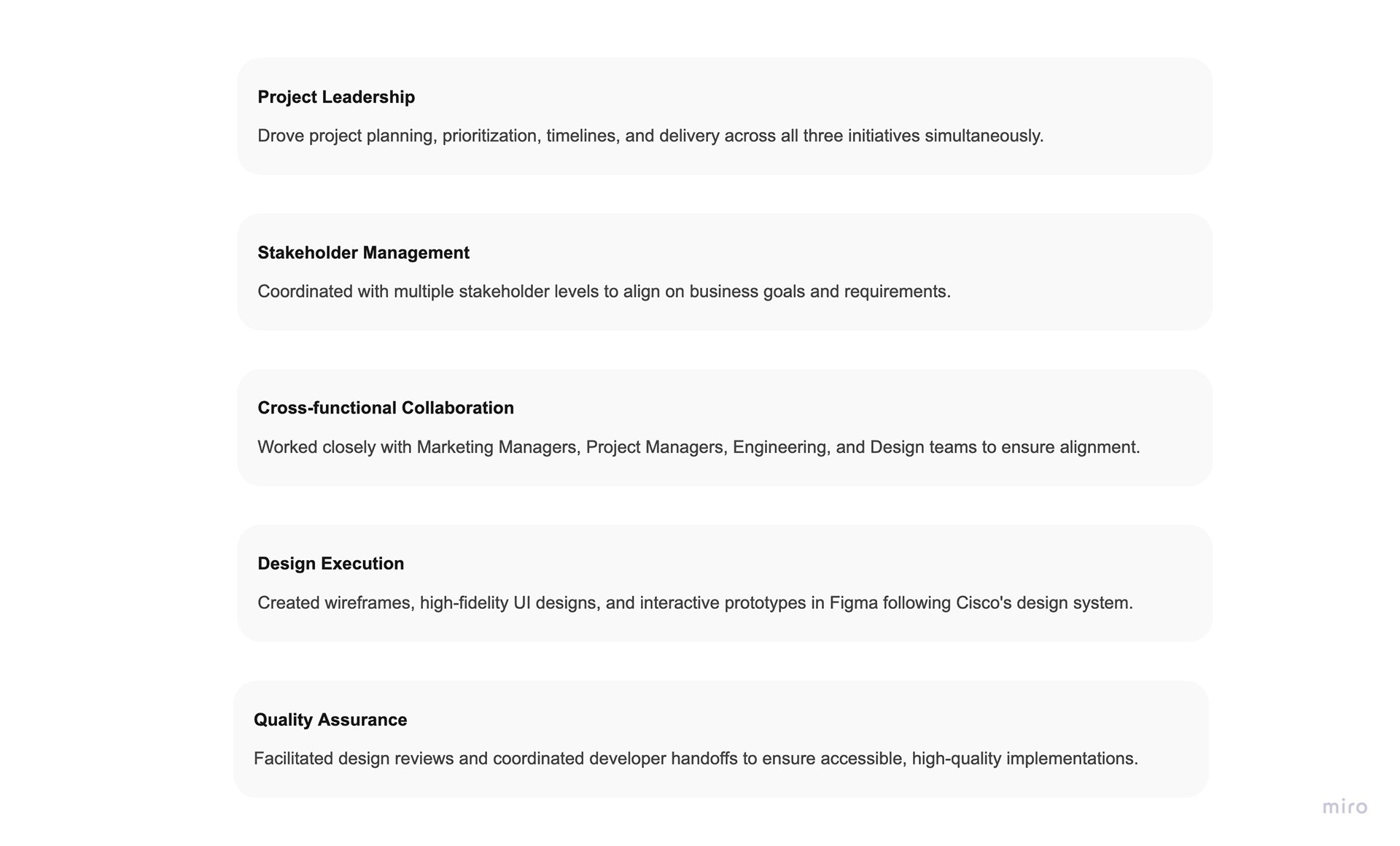
As UX Lead and Project Owner, I wore multiple hats throughout this initiative:
Design Approach
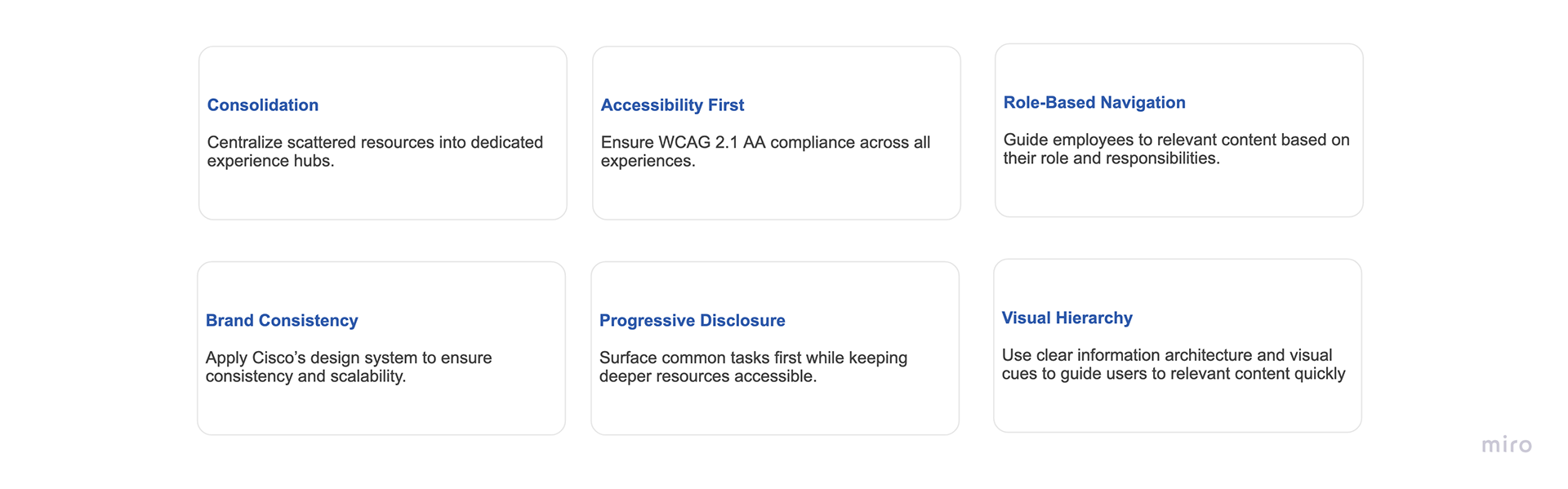
Without direct user research, I leveraged existing pain points identified through support ticket analysis and stakeholder interviews to inform the design strategy. The approach centered on three core principles:
The Solutions
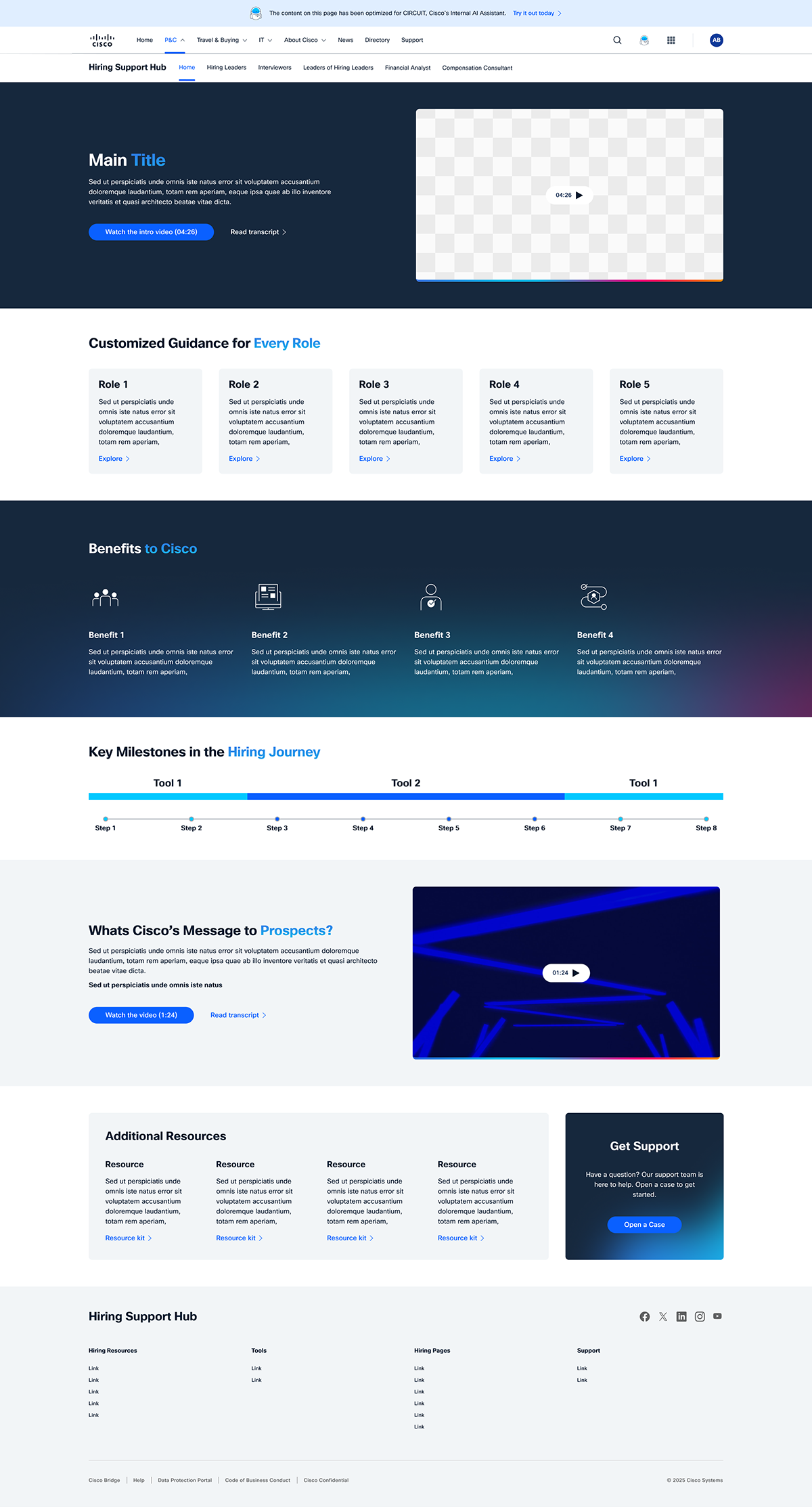
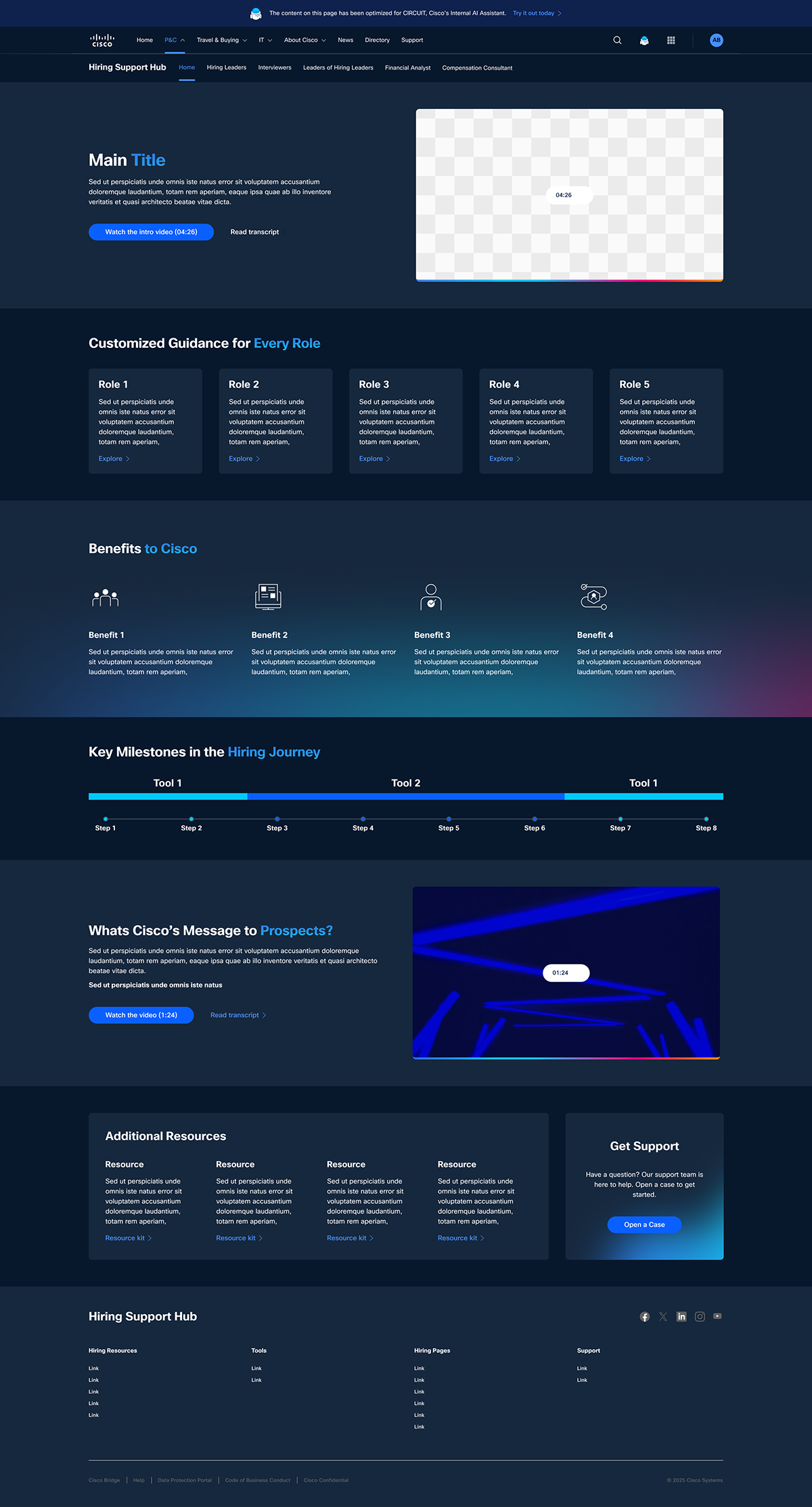
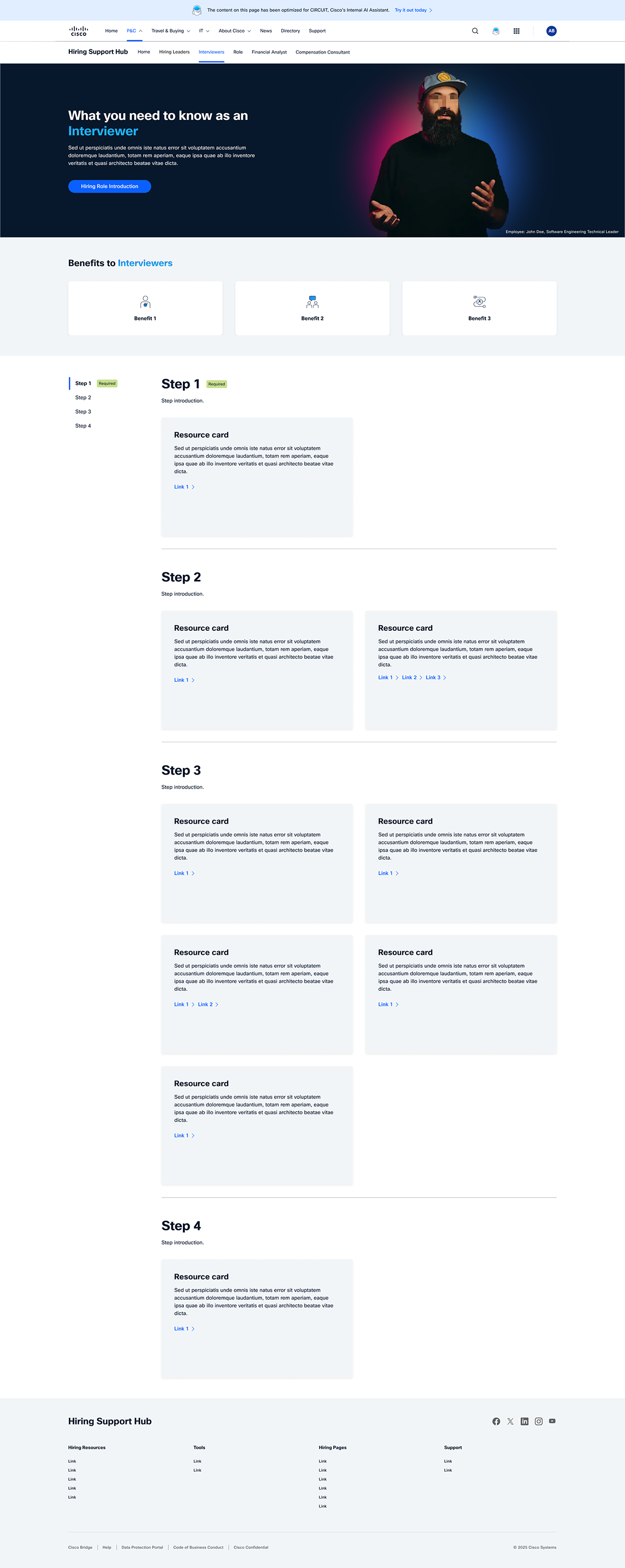
1. Hiring Support Hub
A comprehensive platform serving hiring managers, interviewers, and recruiters with role-specific guidance, interview preparation resources, and streamlined access to hiring tools.
Key Features:
• Customized landing pages for different roles (Hiring Manager, Interviewer, Recruiter)
• Journey-mapped resources aligned to hiring milestones
• Video integration for training and onboarding content
• Quick access to frequently used tools and templates
• Search functionality across all hiring resources
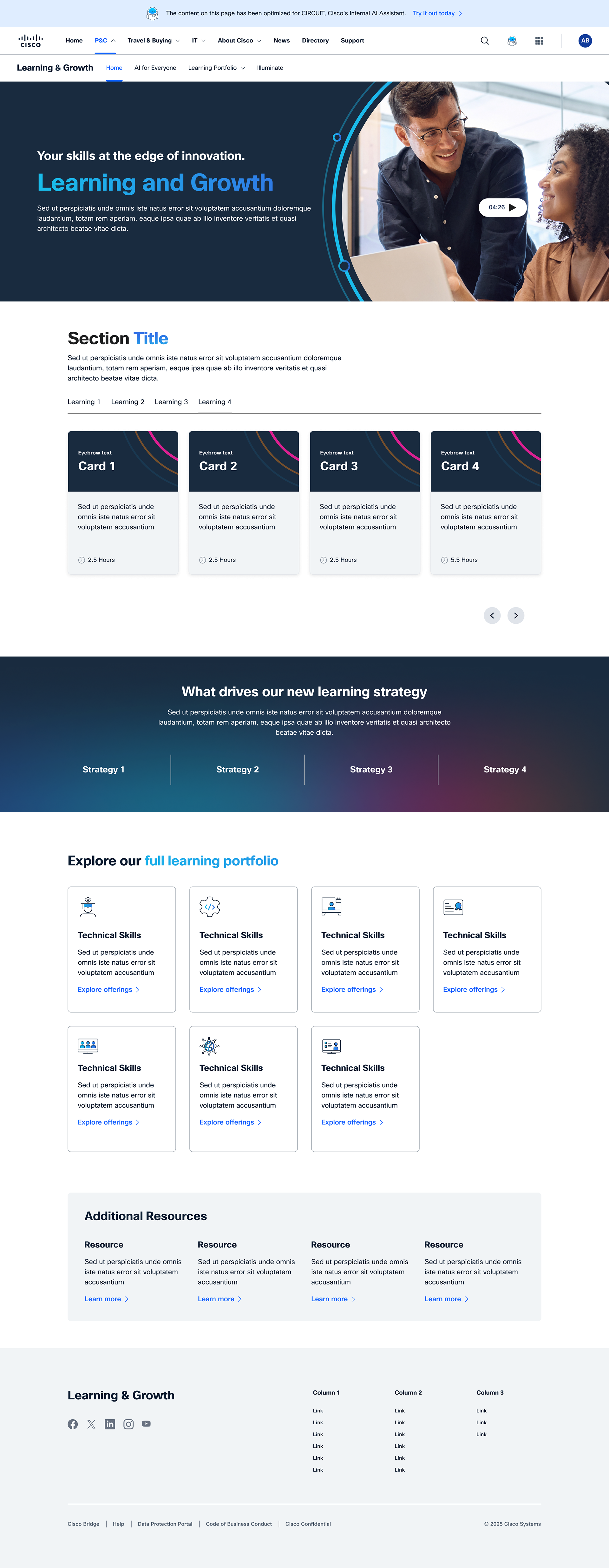
2. Learning & Growth
A skills development platform that helps employees explore learning opportunities, track certifications, and advance their careers through Cisco's comprehensive training portfolio.
Key Features:
• Categorized learning paths by technical skills and career development
• Course cards with duration estimates and difficulty levels
• Learning strategy framework aligned to business objectives
• Resource library with supplementary materials
• Progress tracking and certification management
3. Employee Compensation & Rewards
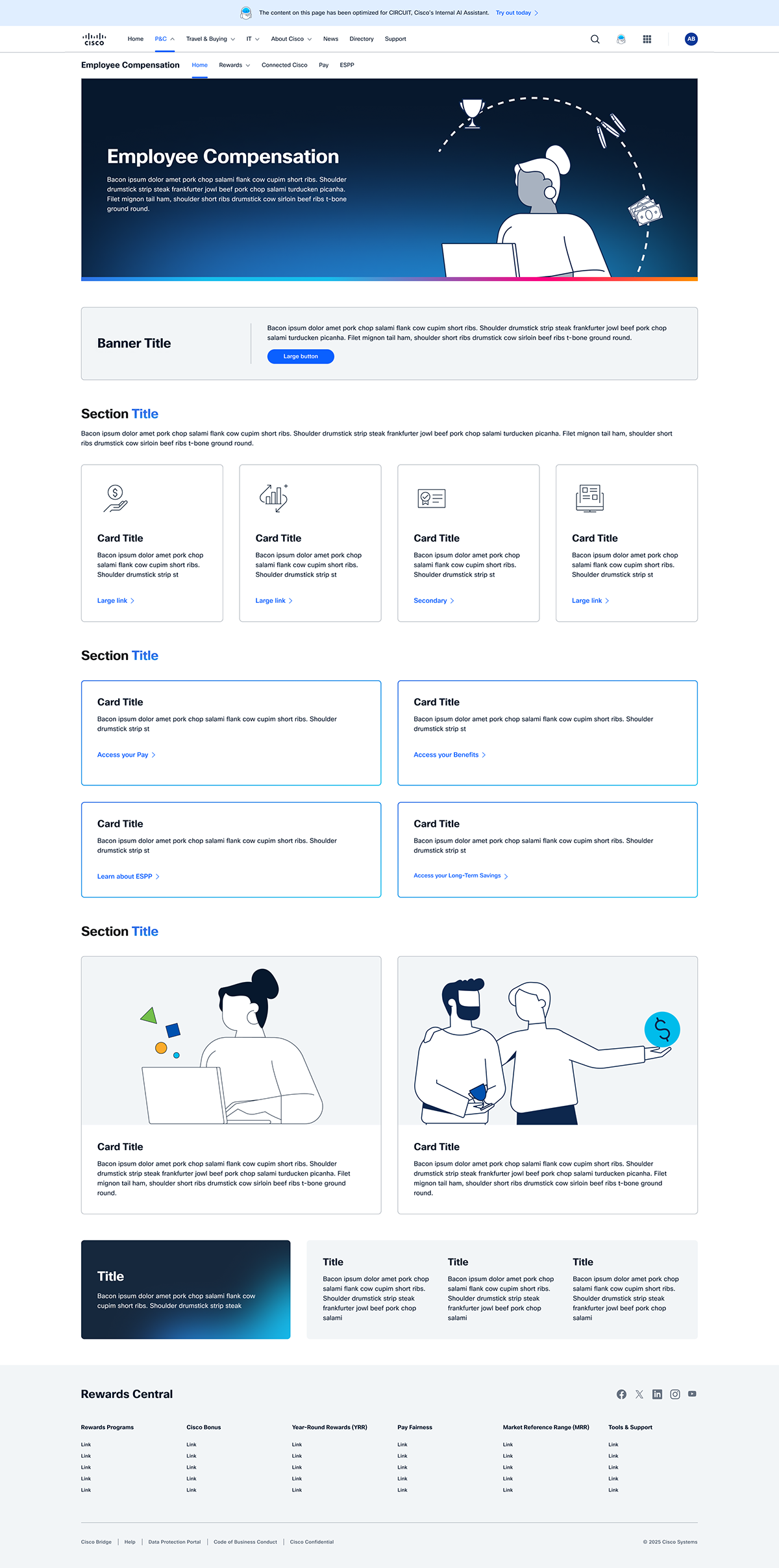
A transparent platform that helps employees understand their compensation packages, benefits, and rewards programs.
Key Features:
• Clear breakdown of compensation components
• Benefits program enrollment and management
• Rewards program access and tracking
• Financial planning resources and calculators
• FAQ and support contact integration
Design Challenges & Solutions
Challenge 1: Multiple Stakeholder Alignment
Each initiative involved coordination with different departments—HR for Hiring, Learning & Development for L&G, and Finance for Compensation. Each group had different priorities and timelines.
Solution: I established a regular cadence of design reviews with stakeholder representatives from each department, creating a shared Figma workspace where feedback could be consolidated. This centralized approach reduced back-and-forth and kept all parties aligned on progress.
Challenge 2: Adhering to Cisco Brand Standards
Cisco's design system is comprehensive but requires careful implementation to maintain consistency across different use cases while still allowing for domain-specific customization.
Solution: I worked closely with Cisco's brand team to understand flexibility within the design system, creating component variations that maintained brand integrity while serving the unique needs of each platform (e.g., role-based navigation patterns, content hierarchy).
Challenge 3: Accessibility Compliance
Ensuring WCAG 2.1 AA compliance across all platforms while maintaining visual appeal and usability was critical, especially given Cisco's commitment to inclusive design.
Solution: I integrated accessibility considerations from the wireframe stage, using automated testing tools during design and working with engineering to validate implementations. Color contrast ratios, keyboard navigation, and screen reader compatibility were verified before each handoff.
Impact & Results
The three platforms are currently in various stages of rollout. Early metrics and feedback indicate significant improvements:
Qualitative Feedback
• Stakeholders reported improved employee satisfaction with the ease of finding hiring resources
• HR team noted reduction in basic "where do I find..." support requests
• Engineering teams praised the detailed, accessible component specifications in design handoffs
• Executive leadership highlighted the improved brand consistency across employee touchpoints
Key Takeaways & Learnings
Stakeholder management is design work. Coordinating multiple departments with different priorities taught me that alignment is as critical as the design itself. Regular, structured communication prevented scope creep and kept everyone invested in the outcome.
Design systems enable consistency at scale. Working within Cisco's established design system accelerated delivery while maintaining quality. Understanding when to follow patterns strictly versus when to extend them thoughtfully was key.
Accessibility can't be an afterthought. Building accessibility into the design process from the start—not treating it as a final checklist—resulted in better, more inclusive experiences without requiring rework.
Project ownership extends beyond pixels. As Project Owner, I learned that successful delivery requires balancing design excellence with timeline management, resource coordination, and stakeholder expectations. The UX Lead role is as much about facilitation as creation.
Consolidation improves experience. The impact of bringing scattered resources into unified platforms confirmed that information architecture and navigation are often more valuable to users than visual polish alone.
Next Steps
As these platforms continue to roll out:
• Conducting post-launch user testing to identify optimization opportunities
• Establishing analytics dashboards to track usage patterns and adoption metrics
• Gathering quantitative data on time saved and support ticket reduction
• Iterating on content structure based on search query analysis
• Expanding the model to additional employee experience domains